
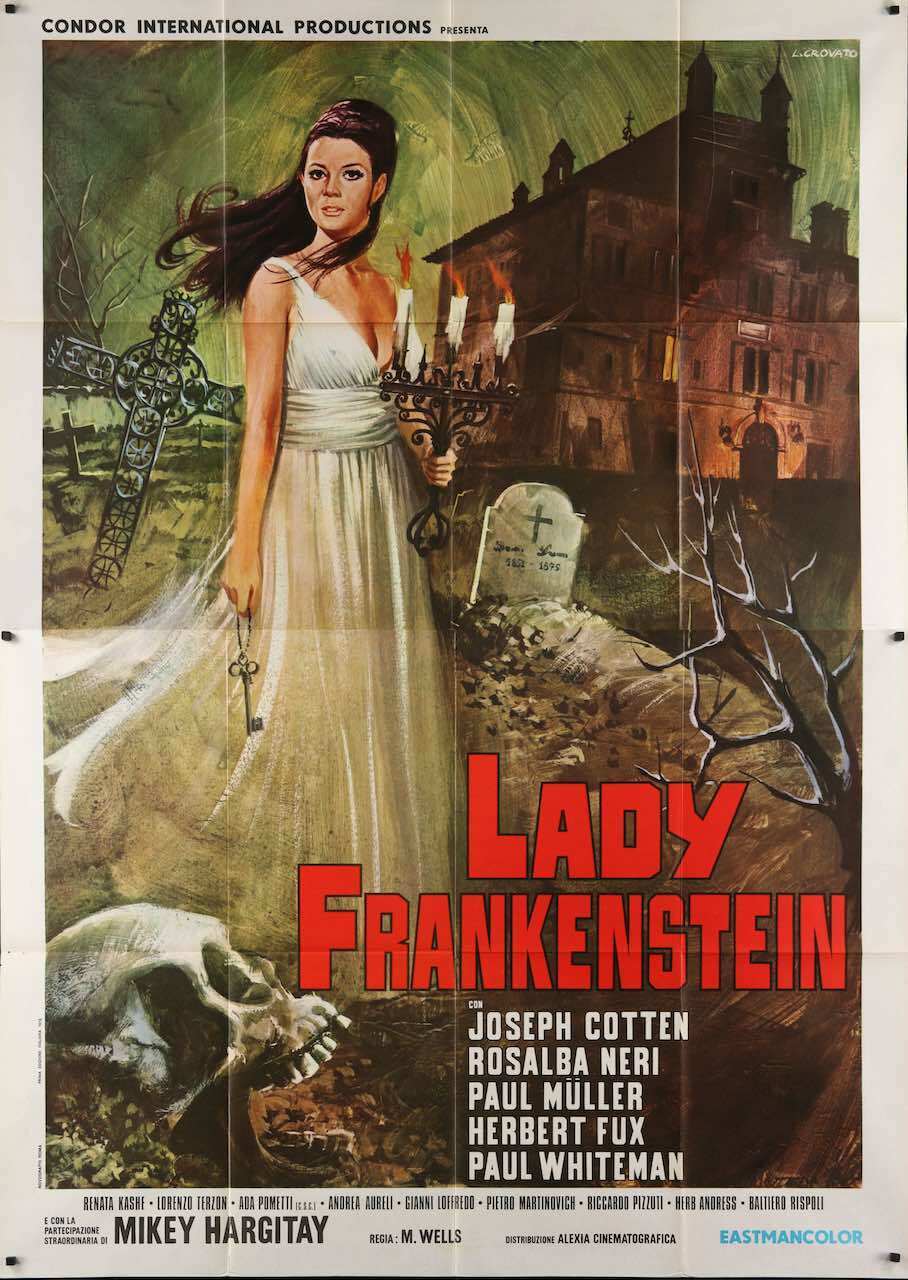
Lady Frankenstein, to put it plainly, is an interesting beast. It features not one, but two monsters, though one is far more hideous than the other. It also features a Frankenstein relative who is both young and attractive in star Rosalba Neri, a rarity when it comes to Frankenstein films. Directed by Mel Welles, the man would give his audience a film that is both familiar and a little more modern, at least as far as 1971 was concerned.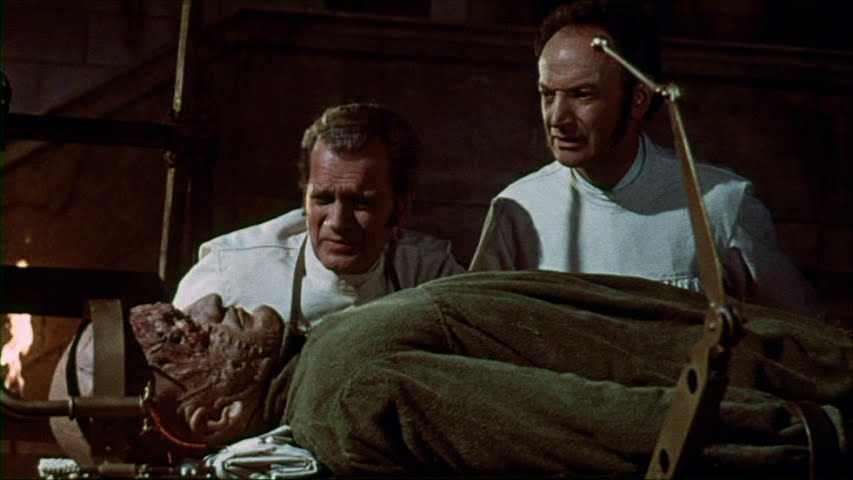 It all begins with the good Baron doing his thing, trying to create life from the dead and having a modicum of success and a dearth of failures. Try and try again, though, as they say, and he continues on with his experiments despite the local constabulary getting wise to the whole situation. One day, the Baron’s daughter Tania comes home, now a surgeon herself. She wants to participate in her father’s work, to continue on as he does, despite her father not wanting her anywhere near it. She is adamant, though, and when life is eventually brought to the monster, it awakens and kills its creator, crafting a clear path for Tania to take over and continue the work her father started. The question is, what path should Tania take? Why craft not a monster, but the ultimate lover, and why should she not if she possesses the skill?
To say that some points in this film are unique is an understatement. One cannot simply do the same thing over and over again, and Welles tries his best to 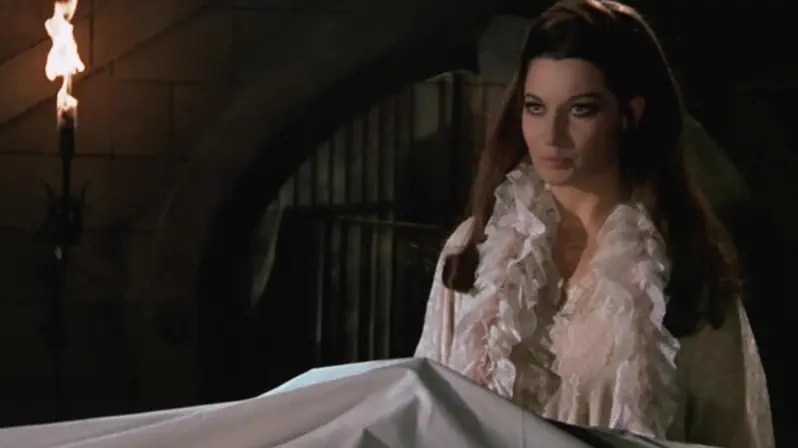 present something a little different than the norm, that being the classic tale of Shelley’s Frankenstein. That is a good thing as the entire affair was like a blend of Hammer gothic, Universal style and Italian sleaze. All three are wonderful in themselves and together, create a very interesting blend of genres, making for an uncommon and intriguing watch. By itself, the film might have worked well enough and captured the attention of its audience. With the addition of horror queen Neri, it would take the movie to another level as the various charms about her would work their magic on more than one level. To spell it out, there was a decent amount of nudity in the film, and it is easy to say that it was not needed in almost every case. Neri herself sheds her clothes in the last act so that she might be with her ultimate creation. There is a reason that Welles cast her in this role, aside from being a very talented actress, and she does not disappoint. While the Baron in most film adaptations tends to be a figure of horror himself, Tania follows a similar path but is more conniving and self-serving than most cinematic Barons, and she makes a perfect villain, for who can say no to a beautiful woman?
The one thing that could have been improved a touch more were those scenes involving the monster the Baron brought to life. At fist, he seems a bit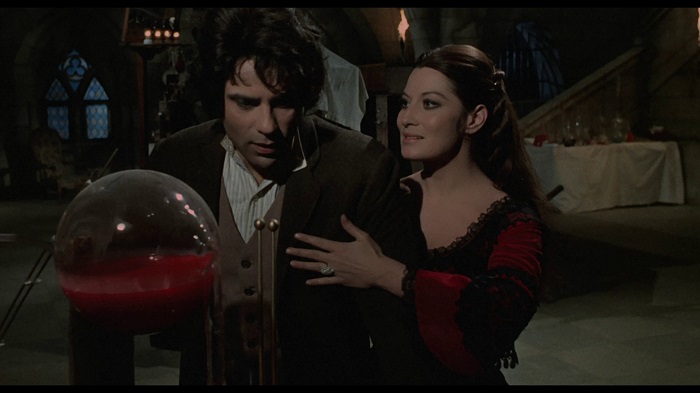 impressive, killing his creator, and one immediately wonders what it is that the creature will do next. As the picture moves forward, the spotlight is on Neri, as it should be, and the monster is treated almost as an afterthought. While it eventually comes to light what the creature is doing, Welles does not make it seem all that important and thus the scenes come off as less than they should be. Fun, yes, and most of the horror from the film came from these scenes that featured the creature. The kills were not that bad, though a little more blood could have been had, and the special effects improved to make the monster a little more impressive and monstrous. At the very least, it all finally joined up in the final act, but it needed a little more to put it all over the top.
The biggest setback the movie suffered from was its low budget, which hampered everything from casting to special effects. It was a nice get to have Joseph Cotton appear, but his role was supposedly cut down due to budget constraints, and the film might have been far better had he had a larger role. Mickey Hargitay, while nice to see, added little, and the rest of the cast, including Paul Muller and Herbert Fux, were good and helped to sell the proceedings. One could go on about the negatives Lady Frankenstein had, but the positives outweighed those in the long run. The look, the feel, the story and Neri made it worthwhile, and it entertained throughout. It may not be the same Frankenstein that everyone knows and loves, but it is a version worth seeking out for the differences alone.
3 out of 5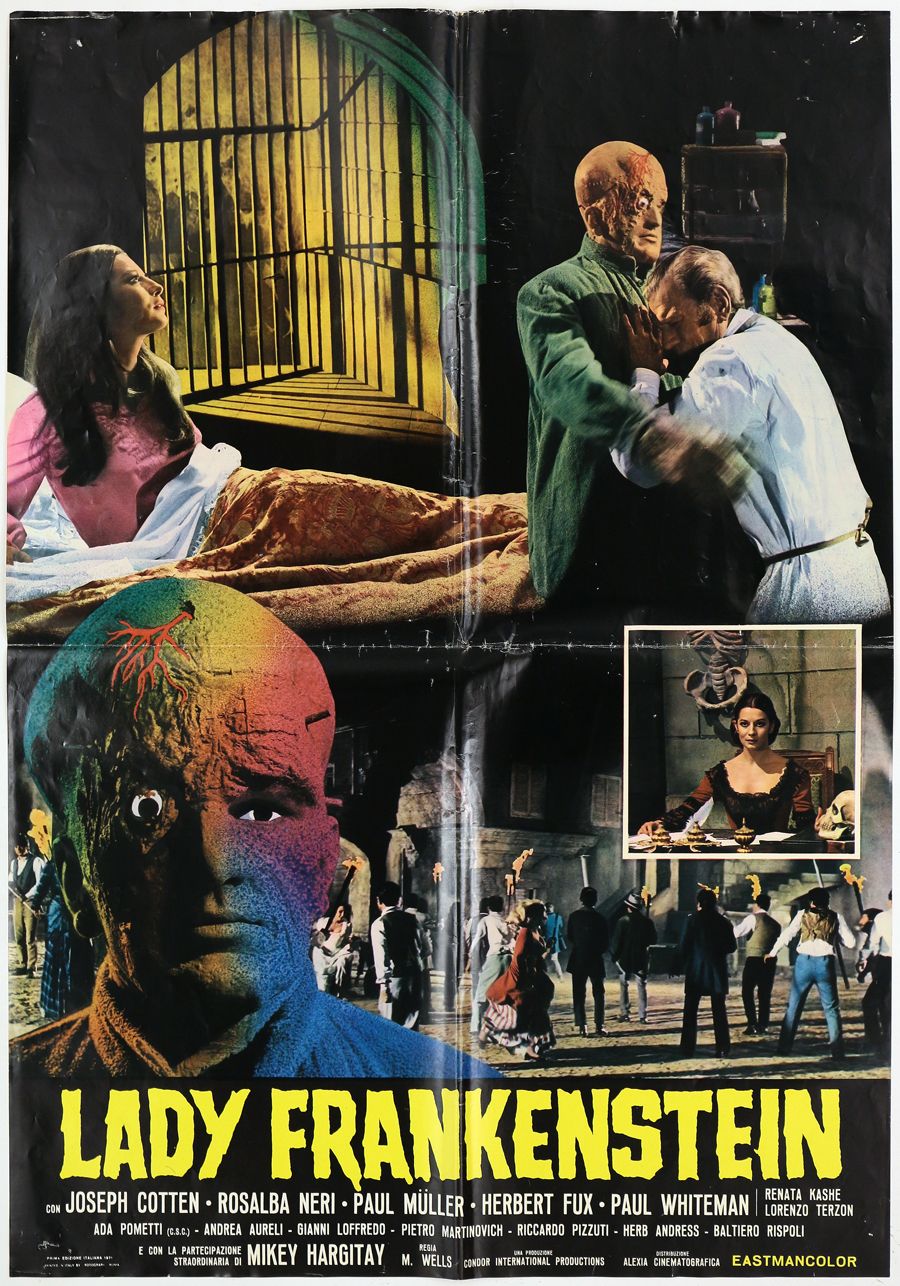
Categories: Horror, Movies and Film
 The Telltale Mind