
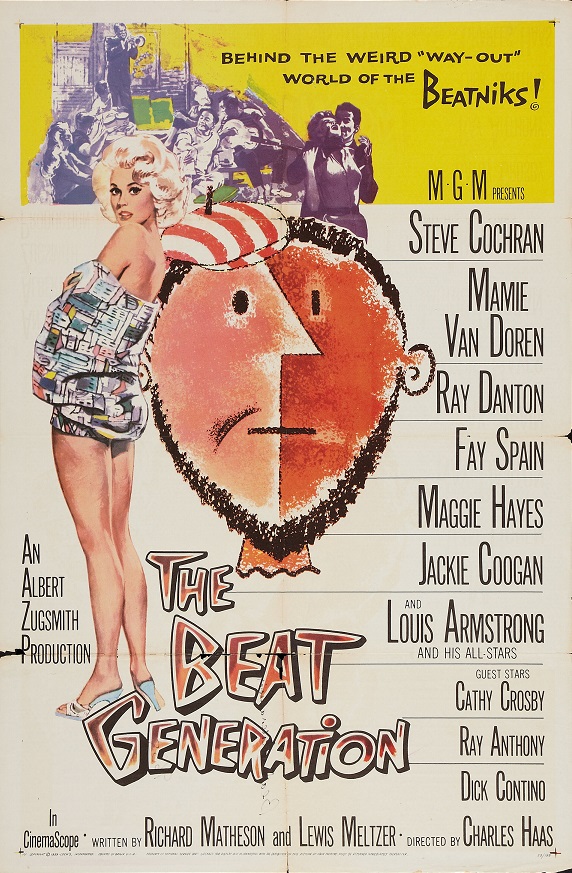
Someone somewhere decided that the world of cinema needed a film where beatniks and crime would collide, and as strange as it might sound, The Beat Generation made for very interesting and compelling viewing.
More often than not, the movie is considered one of the last noir features to be made during the late 1950s, and it is easy to see why with its jazzy score, 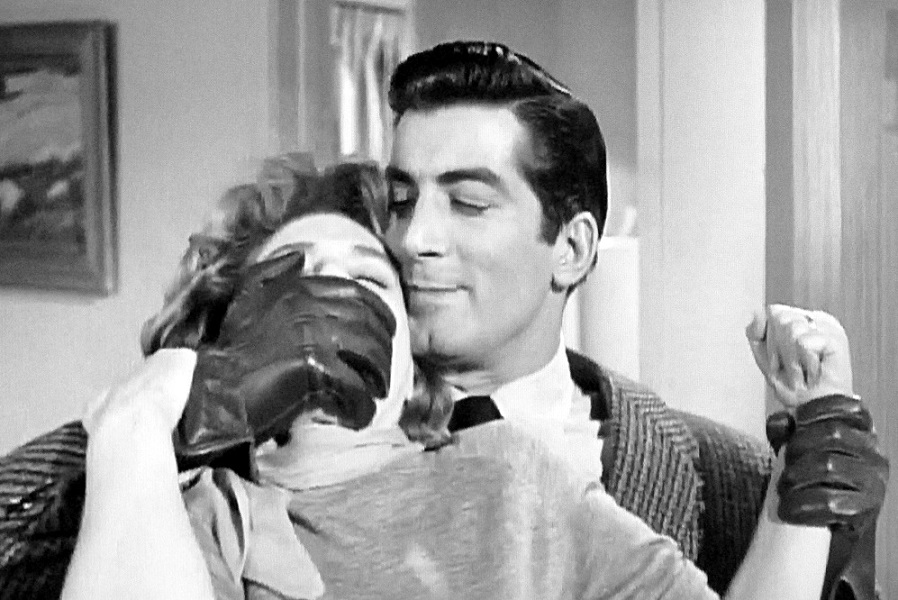 loose women and dastardly criminals who commit the most evil of deeds. Steve Cochran plays a detective who is trying to capture a serial rapist named the Aspirin Kid. Little does he realize that the crimes are being perpetrated by not one but two men, friends who use the exact same modus operandi in every crime they commit. This turns out to be quite genius, and there is a moment when they actually have one of the criminals in a lineup and are unable to prove anything as he could not be identified, his partner having done the crime. The main perpetrator is played by Ray Danton, while his partner is portrayed by James Mitchum, who just happens to be the spitting image of his father, Robert. Factor in the fantastic Mamie Van Doren, Louis Armstrong and even Vampira and one could say that the makers of this movie were trying their best to appeal to everyone and everything.
Going off of that, it is hard to nail-down exactly what genre this film actually falls into. There is the storyline of the rapists who plan out their attacks meticulously, invading the homes of married women whose husbands are away and the woman-hating lead detective who cannot seem to get past his own demons to actually capture the knaves. He also factors into the melodramatic plot of his wife, one of the victims, who is now pregnant and contemplating an abortion, a heady bit of storytelling for a picture released in 1959. Starring Fay Spain, she would go on to keep the child, giving her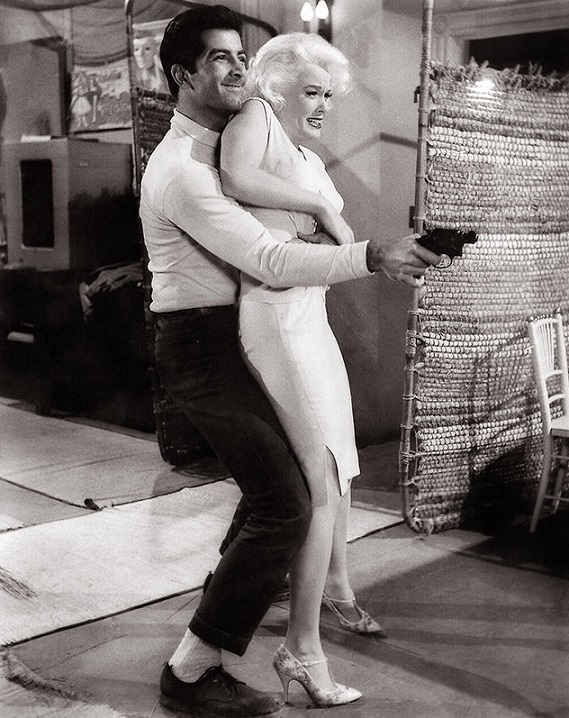 husband an ultimatum where he could choose to live in the past or join her in the raising of their child. Things tend to lighten up though with the presence of the beatniks, free-wheeling, free-loving loafers who love to listen to jazz and recite poetry when the mood strikes, a haven where the killers can hide out among their own with no one the wiser to their actions. One has to assume that the real beatniks of the time were only a passing resemblance to this, so absurd and ridiculous in nature were the ones shown onscreen. Be that as it may, it helped to establish the atmosphere throughout the film, a clash between light and dark that makes for often intriguing and preposterous watching.
There are few who will say this is the best of big screen endeavors, and yet, there is something about it that makes for essential viewing. It could be the opening song by Louis Armstrong that draws one in, the brutality of the crimes that take place within or the talent of the cast whose characters are as varied as one can possibly find in any given picture. The darker overtones of the entire affair are rarely offset by those moments when director Charles F. Haas flashed back to Vampira and the beatniks, but when he did, it just made it all more entertaining to see just how well it would all fit together. Van Doren stood out whenever she took the stage, and it was all exploitative, sleazy, campy and silly and downright strange, but it worked. Whatever one wants to call this hodge-podge of a film, it worked and made for an excellent bit of cinema.
3.5 out of 5
Categories: Drama, Movies and Film
 The Telltale Mind