

There have been many films over the years that would tackle Bram Stoker’s Dracula, and 1979 would find the story making its way to the big screen, courtesy of Werner Herzog. Instead of following in anyone’s footsteps though, Herzog would go his own way with the closest comparable adaptation being the original Nosferatu released in 1922. As it is, Herzog’s movie would be shot in colour and be not only horrific but filled with despair and even, 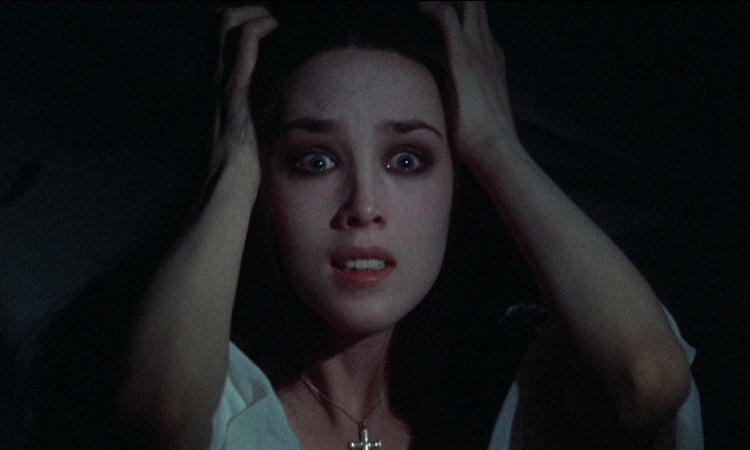 should one not want to believe it, elegance.
Many will speak to the film’s dreariness, the dismal nature of it all, and the melancholy throughout, but it is if nothing else, quite elegant in its portrayal. The cinematography is beautiful with the movie featuring muted sets and gray skies. Rarely does the sun shine in this picture and when it does, it only does so to shine a light on Lucy or on those rare instances of innocence, even should it feature death such as when Mina is found lying on the floor, puncture wounds in her neck. Whether it be the countryside, the streets of Wismar or the bedroom of Lucy, each scene is a masterpiece of atmosphere and mood and one cannot help but soak it all in as the story plays out. The costumes are just as grand if plain for the most part and the makeup even better, especially when it comes to Klaus Kinski in his role as the famous vampire.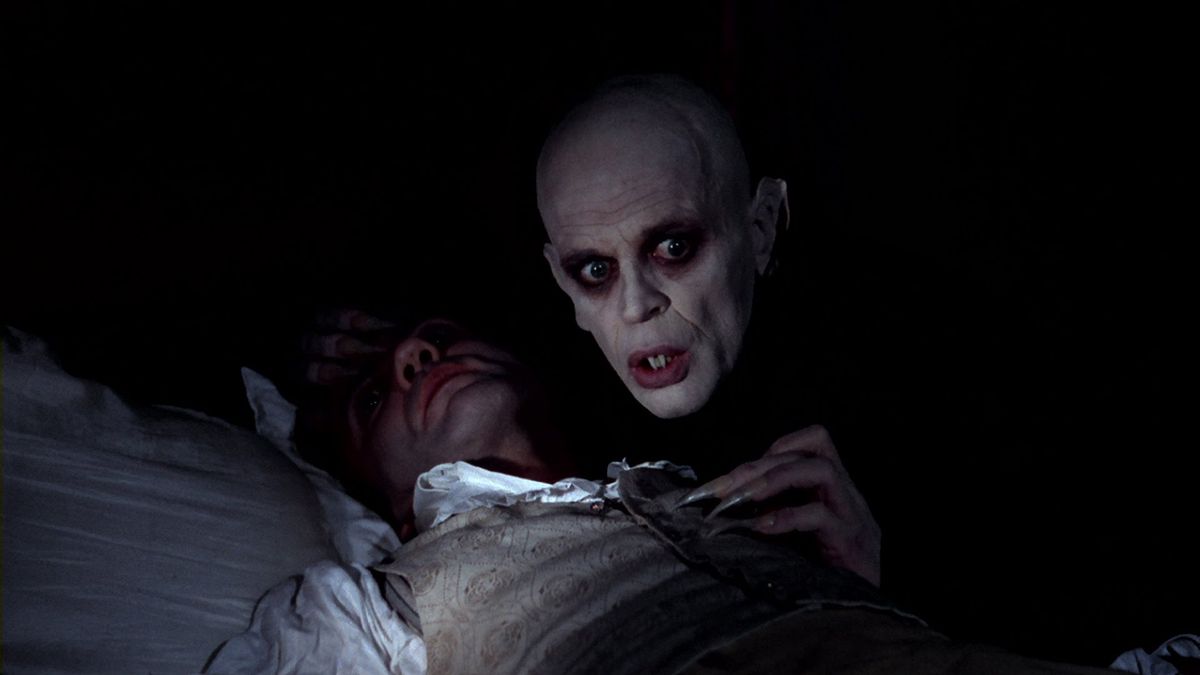
Kinski, quite simply, is incredible as the Count and the makeup goes a long way in making his performance as good as it is. Yet, when all is said and done, it is all in the eyes and Kinski delivers a devastatingly great performance just through the emotions he expresses through them. Pain, longing, hunger – no matter what the situation calls for, one can tell exactly what it is that Count Dracula is thinking without him even uttering a word. When death finally comes for him, even though he wanted it, he shies away knowing that his time is at an end. As tragic and as menacing as he was throughout the movie, death comes for all whether they want it or not. Kinski gives his all in this role and viewers can see it from that first reveal to his very last gasp and the film would not be the same 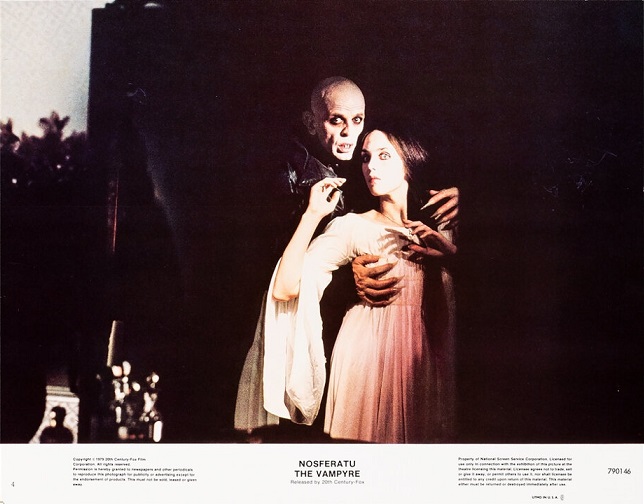 with anyone else in the role.
Also starring would be Bruno Ganz as Jonathan Harker in a fairly sombre performance while Isabelle Adjani, looking as beautiful as she has ever looked, plays the very enchanting Lucy. Though she might be another man’s wife, it is easy to see how she could enchant the Devil to sail across the sea to make her his own. Also making its presence known and a character as much as any man or woman present is the score by Florian Fricke and Popol Vuh. It adds another level of beauty to this already enthralling piece of cinema and plays just as big a part and makes just as much of an impact as the rest of the players found within.
When it was released, Nosferatu the Vampyre was one of the most stylish adaptations of Stoker’s classic to ever be released and to this day, remains as such. It is dark and depressing and no easy watch. There are no heroes, no action and little blood or gore compared to other films featuring the same creature of the night. One could call it a character piece but in the end, when all is said and done, it is simply a very good movie made by talented people and one of the best portrayals of Dracula to ever be filmed.
4 out of 5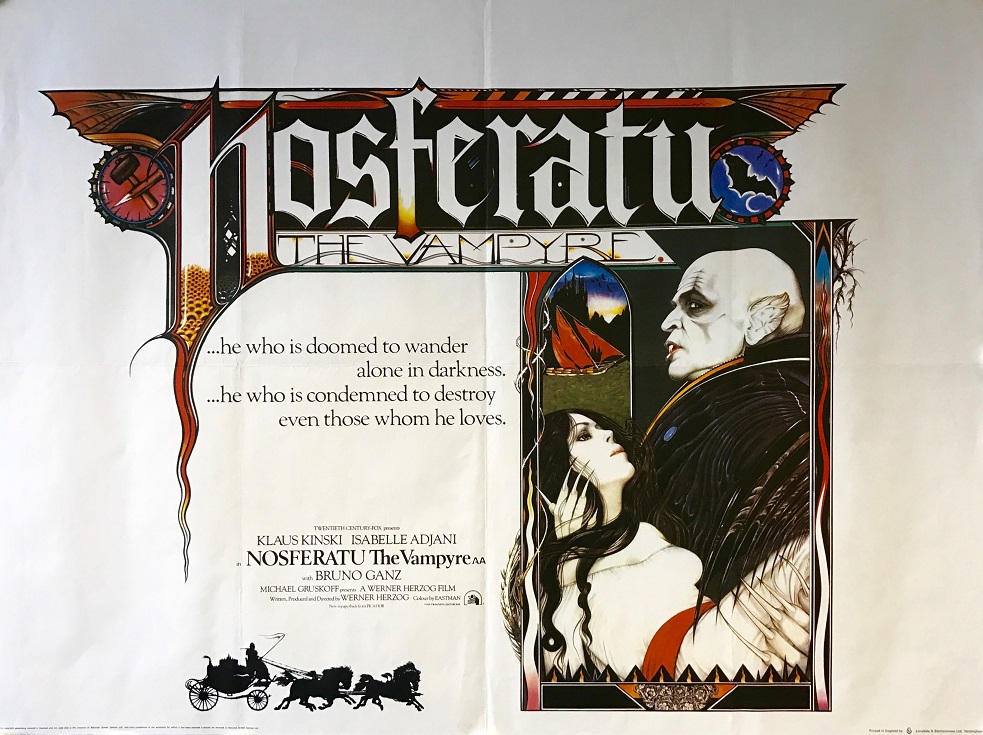
Categories: Horror, Movies and Film
 The Telltale Mind